Why Do We Love Each Other & Still Feel So Far Apart?
You love your partner. That was never the question. And yet something feels missing — a distance you can’t quite name, a quiet that has settled into the space where closeness used to be. If you’ve found yourself wondering how two people who genuinely love each other can feel this far apart, I want you to hear this first: you are not broken, and you are not alone.
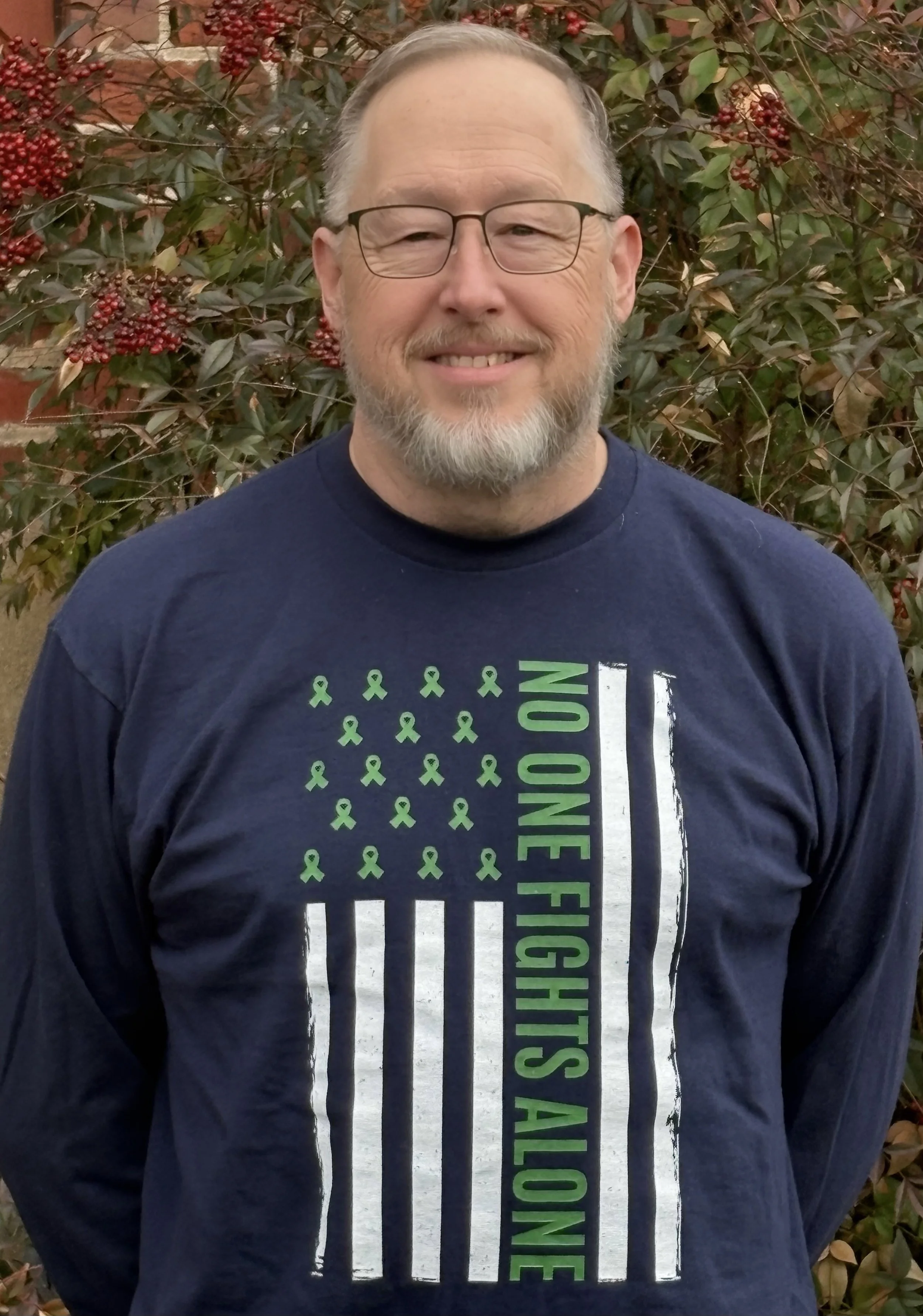
After years of working with couples — and after twenty years in the Navy, plus my own life as a husband and a father — I’ve come to believe one thing deeply. Couples don’t usually lose love. They lose connection. And the hope inside that hard truth is this: connection can be rebuilt.
What Emotional Distance Actually Looks Like
When a couple sits down with me and says, “We love each other, but something feels missing,” I can usually see it before either of them says another word. There’s a terseness. A guardedness. Both people are often a little defensive and a little closed off, each quietly waiting to find out whose side I’m going to take. For the record — I don’t take sides. More on that later.
Underneath the guardedness is something tender. Most couples in this place are profoundly sad. They are carrying an unfulfilled dream. Each person is privately wondering, “What’s wrong with me?” And many have quietly resigned themselves to the belief that nothing will ever change.
I want to say this clearly: wanting the fullest expression of your love — for your partner and for yourself — is not asking too much. It is one of the most human things there is.
The Drift of Life
Distance usually doesn’t arrive in one dramatic rupture. It creeps in slowly. I call it the drift of life.
This shows up powerfully in military families and first responder couples — and I understand it from the inside. We’re trained not to complain, not to be tired, to put the mission first. So emotional distance disguises itself as exhaustion. As just getting through the day. We fall into the drift — and then one day we look up and five, ten, or twenty years have gone by with very little real connection to the people we love and care for the most, often without realizing the emotional toll it has taken on them.
It travels under a lot of respectable names: tiredness, mission creep, the needs of the organization. However we label it, the result is the same. Our families end up getting the last of whatever is left in our emotional gas tanks.
You don’t have to wear a uniform for this to be true. Any of us can drift.
What Men Rarely Say Out Loud
A lot of men end up in couples therapy because their partner asked them to. They sit down on the couch not entirely sure what they’re doing there. I want to speak directly to those men for a moment, because I have been one of them.
No one teaches us how to connect. We are so focused on being a good provider that it can feel like there’s no time for the thoughtful work of staying close to another person. So underneath the disconnection, a lot of men are carrying thoughts they are afraid to say out loud: There’s something wrong with me. I don’t know what else to do. Why can’t I get this right? I knew I’d mess this up.
Here’s what I’ve learned. We’re programmed as men to express anger — but not embarrassment, anxiety, disappointment, shame, fear, guilt, sadness, hurt, or overwhelm. And yet those harder emotions are exactly the road map back to the person we love. The more willing we are to be vulnerable with our partner, the deeper the connection — and the more that vulnerability gets returned to us. Often it is the emotional anxiety we won’t name that quietly fuels the disconnection.
The Roommate Feeling
So many couples describe it the same way: “We’ve become roommates.”
When that happens, the relationship has quietly turned transactional. Usually it’s because one or both partners has come to feel unseen, unheard, or unknown. The ability to make your partner feel seen, heard, and known is the heart of deep connection — and when it goes missing, we stop reaching out. Not because we stopped caring, but because somewhere along the way we picked up a belief: Why bother? It won’t make a difference anyway.
When our words and our needs keep landing on what feel like deaf ears, we begin to feel marginalized in our own relationship. So we go into protection mode. And then both people are stuck in the same lonely loop — not reaching, not heard, not reaching again.
Getting out of it requires something brave: a willingness to risk being hurt or disappointed again. We do that by focusing on something bigger than our own self-protection — our commitment to staying related, and in love.
What Love Without Connection Actually Costs
I said earlier that couples don’t lose love — they lose connection. Let me tell you what that costs.
Connection is the spark. The relationship is the structure you build over time because of that spark. The trouble is that we keep building — kids, careers, mortgages, logistics — without tending to the connection underneath. We add more and more structure, and slowly we lose the excitement of the spark.
You remember the spark, right?
Living with love but without connection leaves you feeling glass-half-empty. There is always a sense that something is missing — because something is. The work of reconnecting isn’t about getting back to half-full. It’s about returning to whole and complete.
What the Turning Point Looks Like
People often ask what it looks like when a disconnected couple starts to find their way back. It’s not the end of therapy — it’s the first real moment something shifts. And when it happens, you can feel it in the room.
There’s a renewed sense of hope and possibility that becomes almost palpable. The couple starts to see what could be possible, and it inspires them to do the work to make it real. They begin to know themselves as difference makers — as people who are capable of growing. They start to see each other’s point of view, to validate the other’s pain and frustration instead of defending against it. Each person begins to feel seen, heard, and known again. They start to matter to each other again. Communication begins to flow with ease, resistance softens, and — this is one of my favorite parts — laughter comes back.
Why I Trust EFT
I work primarily from Emotionally Focused Therapy, or EFT, and I want to tell you why.
In EFT, there are no sides. It is never you against her, or her against you. The relationship is the client. We focus on the things that actually drive how human beings connect — our triggers, our protections, our emotions, and the meaning we make. EFT helps couples get past the surface anger and sadness to the real emotions underneath, the ones that bind us together: the blame, shame, guilt, jealousy, insecurity, embarrassment, fear, hurt, and anxiety we most crave being able to share with the person we love most. So often it is the unsaid that keeps us separated.
EFT is not a one-and-done fix. It is a practice — like eating or breathing — that you keep returning to. I use it in my own relationship every single day. Over time it gives you access to the fullest expression of both people in the relationship, and something surprising happens along the way: you start to crave being connected.
One Thing I Want You to Know
If you’re a man reading this — sitting on the couch wondering why your marriage feels empty — here is the one thing I want you to hear before you ever pick up the phone.
We’ve been sold a bill of goods about how men are supposed to be, act, communicate, and love. What if that story isn’t true? You’ve changed your trajectory before — new positions, new decisions, changing your mind about things you were once certain of. But when it comes to who we are as men, we tend to treat ourselves as fixed, as incapable of change. We say things like, “It’s just who I am. Take me or leave me.”
If you feel stuck, here’s what I tell the men in my office: it’s your thinking that’s keeping you stuck, not your situation. Pain is real. Suffering is optional. Exploring how your thinking shapes the way you see yourself and your relationship isn’t just the pathway to change — it’s the pathway to a total transformation in your relational life.
No one has to do this alone. That includes you.
Ready to Close the Distance?
If you and your partner love each other but the connection feels gone, that distance is workable — and you don’t have to figure it out by yourselves. I work with couples, and I have a particular heart for military families, veterans, and first responder couples who know the drift firsthand.
Reach out to We Thrive Together at we-thrive-together.com or call (540) 371-0328. I offer couples therapy in Fredericksburg, Virginia and online across Virginia. Reaching out is one more hard thing — and one of the most important things you’ll ever do.